

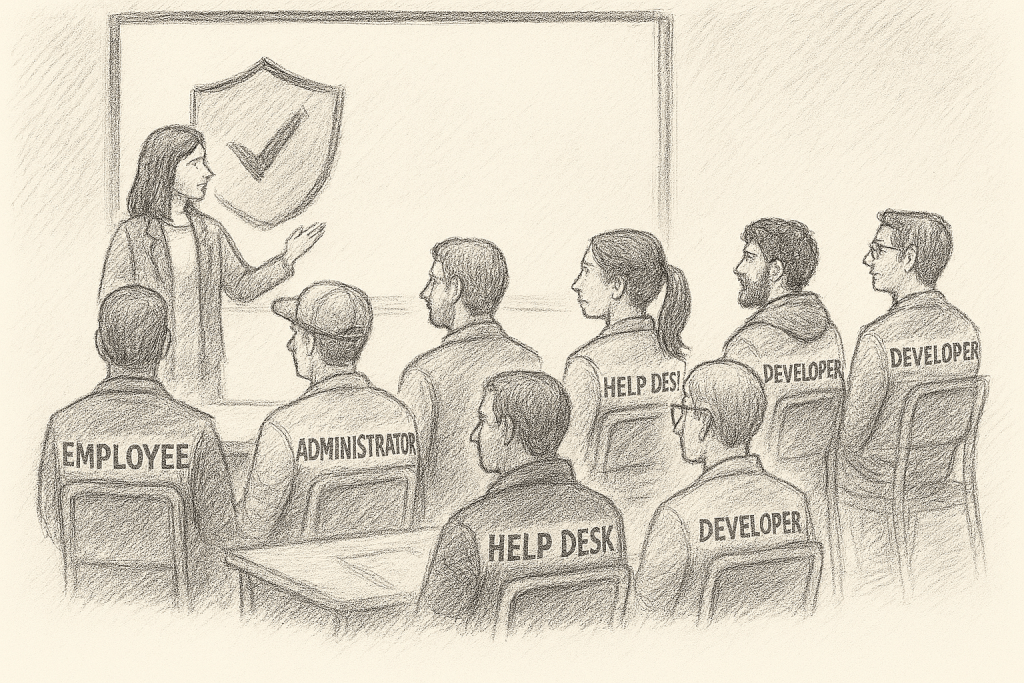
The start of summer is the perfect time to refocus on one of the most critical, and often overlooked, components of any organization’s defense strategy: its people. While technology plays a vital role, your users are truly the first (and sometimes last) line of defense. With the right education and training, users can actively identify and stop threats before they escalate into serious incidents.
Your Workforce: The First Line of Defense
Employees interact with systems, data, and communications every day, making them prime targets for cybercriminals. However, this constant exposure also gives them the opportunity to act as a powerful security asset. By training employees to recognize real-world indicators of cyberattacks, such as misspelled URLs, urgent or threatening language, and suspicious or unexpected requests, you empower them to pause, question, and report potential threats. For practical examples of phishing tactics, refer to the https://consumer.ftc.gov/articles/how-recognize-and-avoid-phishing-scams.
Security awareness is not just a best practice; it is both a regulatory requirement and a strategic imperative. Frameworks like the NIST Cybersecurity Framework reinforce the importance of security awareness programs. Organizations that invest in cybersecurity education for their workforce create a culture of vigilance, ultimately strengthening their overall resilience.
Protecting the Help Desk: A Critical Priority
Help desk and support teams are frequent targets for attackers attempting to gain unauthorized access or sensitive information. Because these teams are responsible for assisting users and often have privileges to reset passwords or modify accounts, they can be an entry point for social engineering attacks.
To mitigate these risks, organizations should implement:
• Real-world scenario training to help staff recognize manipulation tactics
• Multi-tiered approval processes for access changes or sensitive requests
• Clear playbooks that outline common red flags and appropriate responses
By combining proactive education with well-defined processes, support teams can identify and stop attacks before they succeed.
Elevated Access Demands Elevated Awareness
Administrators and privileged users hold the keys to critical systems, directories, logs, and tools. This makes them especially valuable targets for sophisticated attackers. A common misconception is that experienced or technical users are less likely to fall victim to phishing or social engineering, but attackers specifically tailor their tactics to deceive these individuals.
Targeted education for administrators is essential. Training programs should focus on:
• Recognizing advanced and targeted attack techniques
• Understanding how attackers exploit privileged access
• Encouraging early detection and reporting of suspicious activity
With heightened awareness, privileged users can identify threats at an early stage, before they escalate into organization-wide incidents.
Building Security from the Ground Up
Strong cybersecurity does not begin after deployment. It starts during development. Training application developers in secure coding practices, testing frameworks, and common web application vulnerabilities delivers long-term value for the organization. Developers can reference widely recognized resources like the OWASP to understand the OWASP Top Ten Web Application Security Risks and review secure coding practices.
Developers should also learn about integrating low-cost security testing tools directly into the development lifecycle. Doing so allows teams to identify and address vulnerabilities early. This proactive approach not only reduces risk but also minimizes the cost and effort associated with fixing issues later in production.
Creating a Culture of Cyber Resilience
Across all roles, employees, support teams, administrators, and developers, one theme remains consistent: education is key. When organizations prioritize security awareness, they create a culture where every individual understands their role in protecting the business.
By strengthening your human firewall, you are not just meeting compliance requirements. You are building a resilient organization capable of detecting, preventing, and responding to cyber threats more effectively.
Effective, role-based training is one of the fastest ways to reduce risk across your organization. We partner with clients to train administrators, technical staff, and developers with real-world, role-specific skills that reduce risk immediately. Contact us today to start building a stronger defense.